Quick summary for busy business owners.
- Singapore SME grants such as PSG and EDG generally support part of eligible project costs, not 100% of your website, app or software idea.
- Grant support is not automatic. Eligibility, project scope, documents, qualifying costs, approval and claim conditions matter.
- Many grants work on reimbursement or co-funding logic, so business owners still need budget and cash-flow readiness.
- A vague app idea is not the same as a real productivity or automation project with measurable business improvement.
- Grants are useful when the business owner has a real problem, real operations, a serious scope and willingness to invest.
Every now and then, I get a message that starts quite normally.
"Hi Anees, I want to build a website."
Or:
"I have an app idea."
Or:
"We need a CRM system."
So far, okay. Normal.
Then comes the sentence.
"Can get government grant right? So I don't need to pay anything?"
Ah.
There it is.
The famous grant sentence.
At that moment, somewhere in Singapore, a software developer quietly puts down his coffee and stares into the distance.
Because somehow, some people have got the idea that Singapore government grants mean:
"Bring idea only. No need budget. Developer build. Government pay. Everyone clap."
Sorry ah.
That is not how it works.
The Singapore Government has useful grant schemes for SMEs. These grants can support productivity, automation, business transformation, digitalisation and capability development.
But generally, they are not 100% grants for your website, app, CRM or software idea.
They are not free magic money.
They are not a way to avoid investing in your own business.
They are not a jackpot machine where you insert "I have idea" and receive "fully funded app".
If only.
I would also like one.
Government grants are support, not free business capital
Let us clear the biggest misunderstanding first.
Government grants are meant to support serious business improvement.
They are not meant to replace the business owner's responsibility to invest.
For many Singapore SMEs, grants like the Productivity Solutions Grant, usually called PSG, and the Enterprise Development Grant, usually called EDG, can be useful.
But the important word is support.
Not "sponsor everything".
Not "pay 100%".
Not "developer, please carry all the risk while I stand nearby with my idea and positive energy".
A grant is support.
A grant is not a sugar daddy.
For example, Enterprise Singapore states that the Productivity Solutions Grant supports eligible costs up to the stated support level for local SMEs. That means the business still has to pay part of the cost.
Enterprise Singapore also explains that the Enterprise Development Grant supports eligible project costs up to the stated support level, subject to project scope and approval.
Notice what is missing?
100%.
Very shy number. It did not appear.
"Up to" does not mean "confirmed"
This is another important point.
When a grant says up to a certain support level, it does not mean every company automatically gets that exact amount.
The phrase "up to" is doing a lot of work.
Please respect it.
"Up to" means subject to eligibility, project scope, qualifying costs, approval, documentation, conditions and claim verification.
The Government does not just look at your idea and say:
"Wah, very nice. Take money."
They assess. They check. They ask for proper details.
They want the project to make sense.
They want to know whether the company is eligible.
They want to know whether the project helps business capability, productivity, innovation or transformation.
So when someone says, "Can confirm get grant or not?" the honest answer is:
No serious vendor should guarantee that.
A developer can support with quotation, project scope and technical details.
But grant approval is not controlled by the developer.
I build systems.
I do not print government money in my backend folder.
Many grants work by reimbursement
Here is the part many people miss.
Some grants work on a reimbursement basis.
That means the company may need to proceed with the project, pay the vendor, complete the required deliverables, submit the claim documents, and then wait for claim approval.
So if someone comes with zero budget and says:
"Can you build first, then I claim grant, then I pay you?"
My answer is very simple.
No lah.
This is not how a serious project should start.
If you have zero budget, reimbursement is not your problem.
The word "pay" is.
A real business owner must understand cash flow.
Even when grants are involved, the company still needs to be financially ready.
You cannot expect the developer to become your bank, your grant consultant, your investor, your risk absorber, your project manager and your emotional support pillow.
One human only, please.
Your website or app idea is not automatically grantable
Another myth is this:
"Anything digital can get grant."
Not necessarily.
A website, mobile app, CRM system, booking system or custom software project does not automatically qualify just because it is digital.
Grant schemes have criteria.
Some support pre-approved solutions. Some support capability development. Some support automation or transformation. Some costs may qualify. Some may not.
A basic marketing website may not be treated the same way as a proper business process automation project.
A simple "I want an app like Grab" idea is not the same as a real operational system that improves staff productivity, reduces manual work and supports business growth.
This is where many people confuse the tool with the business case.
The Government is not just asking:
"Is there software?"
The better question is:
"What business problem does this solve?"
If there is no clear business problem, no clear workflow, no clear measurable improvement, and no real business behind it, then what exactly are we funding?
Imagination?
A real example: when EDG actually made sense
Let me give a real example from my own work.
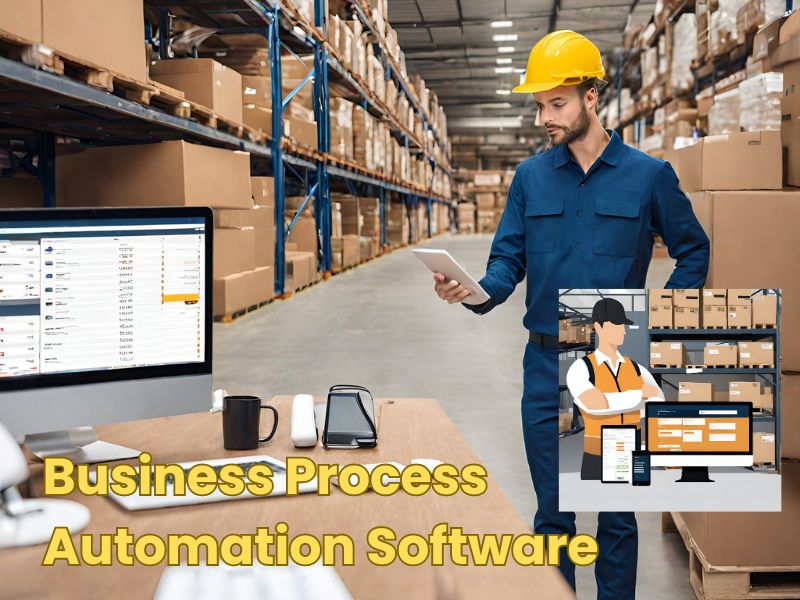
One of my clients was a wholesale grocery provider in Singapore.
This was not someone who came to me and said:
"Bro, I have an idea. Can government pay 100%?"
No.
He had a real business.
He had real orders.
He had staff.
He had daily operations.
And he had a painful manual workflow.
Orders had to be received, processed, picked, packed, checked, assigned for delivery and tracked.
A lot of the work depended on manual coordination, paper, spreadsheets, WhatsApp messages, staff memory and repeated updates.
Very human system.
Also very tiring system.
The business had real operational problems:
- too much manual coordination
- too much repeated data entry
- too much dependency on staff memory
- too much chance of wrong picking or packing
- unclear order status
- inefficient delivery preparation
- difficulty scaling without adding more admin work
So I built a custom system around the real workflow.
The system helped digitise and automate the process from order handling to picking, packing and delivery coordination.
That kind of project made sense for EDG consideration because it was not just:
"I want a nice website."
It was business process improvement.
It was productivity improvement.
It was automation.
It was a real company investing in a real system to improve operations.
And yes, the client was able to claim EDG support for that project.
But notice the important part.
He did not come with zero budget.
He did not come with only an idea.
He came with a real business problem, real operations, and willingness to invest.
That is the difference.
Have a real workflow problem to solve?
If your business is stuck with manual orders, Excel tracking, missed follow-ups, WhatsApp chaos or repeated admin, we can discuss whether a custom system makes sense.
Discuss your projectA business improvement project is different from a wish
This is the part many prospects need to understand.
A proper grant-supported project usually has:
- an existing company
- real business activity
- a clear operational problem
- manual processes that can be improved
- productivity gains
- measurable business outcomes
- proper documentation
- a serious project scope
- a budget
- willingness to co-pay
- willingness to follow the claim process
A weak grant expectation sounds like:
- "I have an idea."
- "Can government pay?"
- "I don't want to fork out anything."
- "You help me get grant first."
- "If grant approved then I do."
- "Can claim 100%?"
- "Can make app like Grab?"
- "I have no company yet, but I have concept."
This is not business transformation.
This is a wish wearing a business shirt.
Grants are not for dreams floating in the air.
They are for real businesses solving real problems.
Why co-payment is actually healthy
Some people get upset when they realise they still need to pay part of the project cost.
But co-payment is actually healthy.
Why?
Because it proves commitment.
If you are not willing to invest anything into your own idea, why should the Government, the developer or anyone else take the full risk?
If your idea is worth building, it should also be worth co-investing in.
This may sound harsh, but it is true.
A business owner with real commitment behaves differently.
They ask better questions.
They care about scope.
They care about users.
They care about process.
They care about results.
They are not just chasing free money.
They are trying to solve a real business problem.
That is the kind of client I enjoy working with.
The developer is not the grant genie
Let us also clear another misunderstanding.
Some prospects think the developer can somehow "get the grant" for them.
As if I have a secret red phone connected to a government office.
I do not.
The company applying for the grant must be eligible.
The company must submit the application properly.
The company must be responsible for the information provided.
The company must follow the grant conditions.
The company must handle the claim properly.
A vendor can help by providing:
- quotation
- project scope
- technical explanation
- deliverables
- implementation timeline
- system description
- support documents where appropriate
But the vendor cannot magically guarantee approval.
I am a web-app, mobile-app and software developer.
Not a grant wizard.
If I had wizard powers, I would first fix all broken contact forms in Singapore.
Then maybe world peace.
What a serious grant conversation sounds like
If you are a business owner and you want to explore grants properly, this is the right way to approach it.
Do not start with:
"Can get grant or not?"
Start with:
"What business problem am I trying to solve?"
For example:
- We are tracking leads manually in Excel.
- Our staff forget to follow up.
- Orders are coming in from too many channels.
- Our packing process has too many mistakes.
- Customers keep asking the same appointment questions.
- We need a system to manage service requests.
- We want better visibility of sales, operations and delivery status.
- We want to reduce repeated admin work.
Now we have something serious to discuss.
Then we can ask:
- Is this a productivity improvement project?
- Is this a business process automation project?
- Is this a CRM or workflow system?
- Is there a measurable benefit?
- What is the budget?
- What is the timeline?
- What documents are needed?
- Is there any suitable grant scheme?
- Who will apply and manage the claim?
This is how serious business owners talk.
Much better than:
"I got idea. Can free?"
What you should prepare before asking about grants
Before asking a developer whether your project may be grant-supported, prepare these things.
1. Describe your current process
How are you doing things now?
Excel? WhatsApp? Paper? Memory? Staff shouting across the office?
2. Describe the pain
Where are the delays, mistakes, missed follow-ups, repeated admin work or customer complaints?
3. Describe the improvement you want
Do you want automation, better tracking, fewer mistakes, faster response, better reporting, or smoother customer experience?
4. Prepare a real budget
Even if grant support is possible, you should not approach the project with zero money.
5. Understand that approval is not guaranteed
A good developer can build a sensible solution.
A good grant consultant may advise on grant matters.
But no one should promise free government money like selling durian during promotion.
Website, app and CRM projects should still make business sense without grants
This is my strongest advice.
If the project only makes sense because of a grant, be careful.
A grant can reduce cost.
It should not be the only reason the project exists.
If your business needs a CRM system, it should be because you need better lead tracking, follow-up, reporting and customer management.
If your business needs a website, it should be because you need trust, visibility, enquiries and a proper online presence.
If your business needs an appointment booking system, it should be because your current booking flow is messy, manual or causing missed opportunities.
If your business needs custom software, it should be because your workflow is specific and off-the-shelf tools are not solving the problem properly.
The grant is a bonus.
The business case must stand on its own legs.
If the business case has no legs, the grant cannot carry it like a tired child.
I am not against grants
Let me be clear.
I am not against grants.
Government grants can be useful.
I have seen clients benefit from grant-supported projects.
I have built systems where grant support helped the company move forward with a proper automation project.
But grants are useful only when the project is serious.
They are not useful when people treat them as free money for vague ideas.
The right mindset is:
"I have a real business problem. I am willing to invest. If there is grant support, it can help reduce part of the eligible cost."
The wrong mindset is:
"I have no budget. Can the Government pay everything?"
One is business thinking.
The other is fantasy accounting.
Final thought
If you are a Singapore business owner planning a website, app, CRM system, booking system or custom software project, grants may be worth exploring.
But please do not start with the assumption that the Government will pay 100%.
Start with your business problem.
Start with your workflow.
Start with your customers.
Start with your team's daily pain.
Start with what you want to improve.
Then, if the project is suitable, grant support may help reduce part of the cost.
But you still need commitment.
You still need budget.
You still need responsibility.
You still need to invest in your own business.
Because no grant can replace business seriousness.
And if your idea is only exciting when someone else pays the full bill, then maybe the first thing to improve is not the website, app or CRM.
Maybe it is the business plan.
Common questions about this topic.
Does the Singapore Government give 100% grants for websites or apps?
Generally, no. Common Singapore SME grants such as PSG and EDG usually support only part of eligible project costs, subject to eligibility, approval and claim conditions. Business owners should not assume their website, app or software project will be fully funded.
Can PSG pay for my entire website or software project?
No, PSG is not generally a 100% grant. It supports eligible solutions up to the stated support level. The business still needs to pay its share and meet the relevant eligibility and claim requirements.
Can EDG support custom software development?
EDG may support suitable projects that improve business capabilities, productivity, innovation or automation, subject to Enterprise Singapore assessment and eligibility rules. A custom software project with a real productivity or workflow improvement case is stronger than a vague app idea.
Do I need to pay first before claiming a grant?
Many grant claims work on a reimbursement basis. This means the company may need to pay the vendor, complete the project deliverables, submit proper documents and wait for claim approval. Always check the latest grant terms before committing.
Can a vendor apply for the grant for me?
The applying company is responsible for its own grant application and compliance. A vendor can usually provide quotation, project scope, technical details and supporting documents, but the company must be eligible and responsible for the application.
Is grant approval guaranteed?
No. Grant approval is not guaranteed. It depends on eligibility, project scope, qualifying costs, documents, assessment and current grant conditions. Be careful if anyone promises guaranteed approval.
Should I build my website or app only if I get a grant?
Be careful. A grant should reduce the cost of a serious business project, not be the only reason for doing it. If the project does not make business sense without a grant, the project may need more planning first.