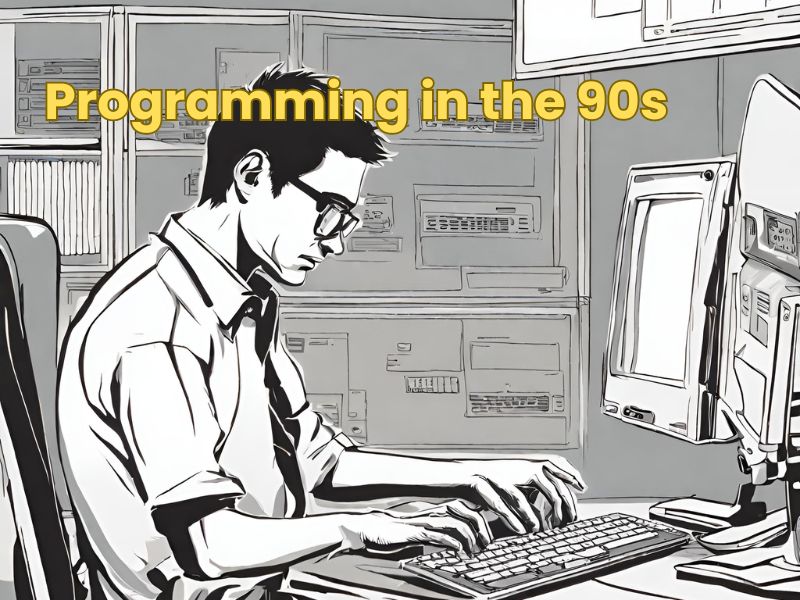
There was a time when going online in Singapore felt like launching a rocket.
Not the sleek SpaceX kind. More like the "press one button and pray nothing explodes" kind.
You would sit in front of the computer, click the connection icon, and then the modem would begin its national anthem.
Krrrrr... eeeeee... krrrk... piu piu piu... shhhhhhh...
If you know, you know.
That sound was not just noise. That was hope. That was anxiety. That was the sound of Singaporeans entering a new world while someone in the house shouted, "Don't use the phone ah!"
Today, we complain when a website takes three seconds to load. Last time, we waited three minutes for one image to appear slowly from top to bottom like it was doing curtain reveal at the National Day Parade.
And somehow, we were happy.
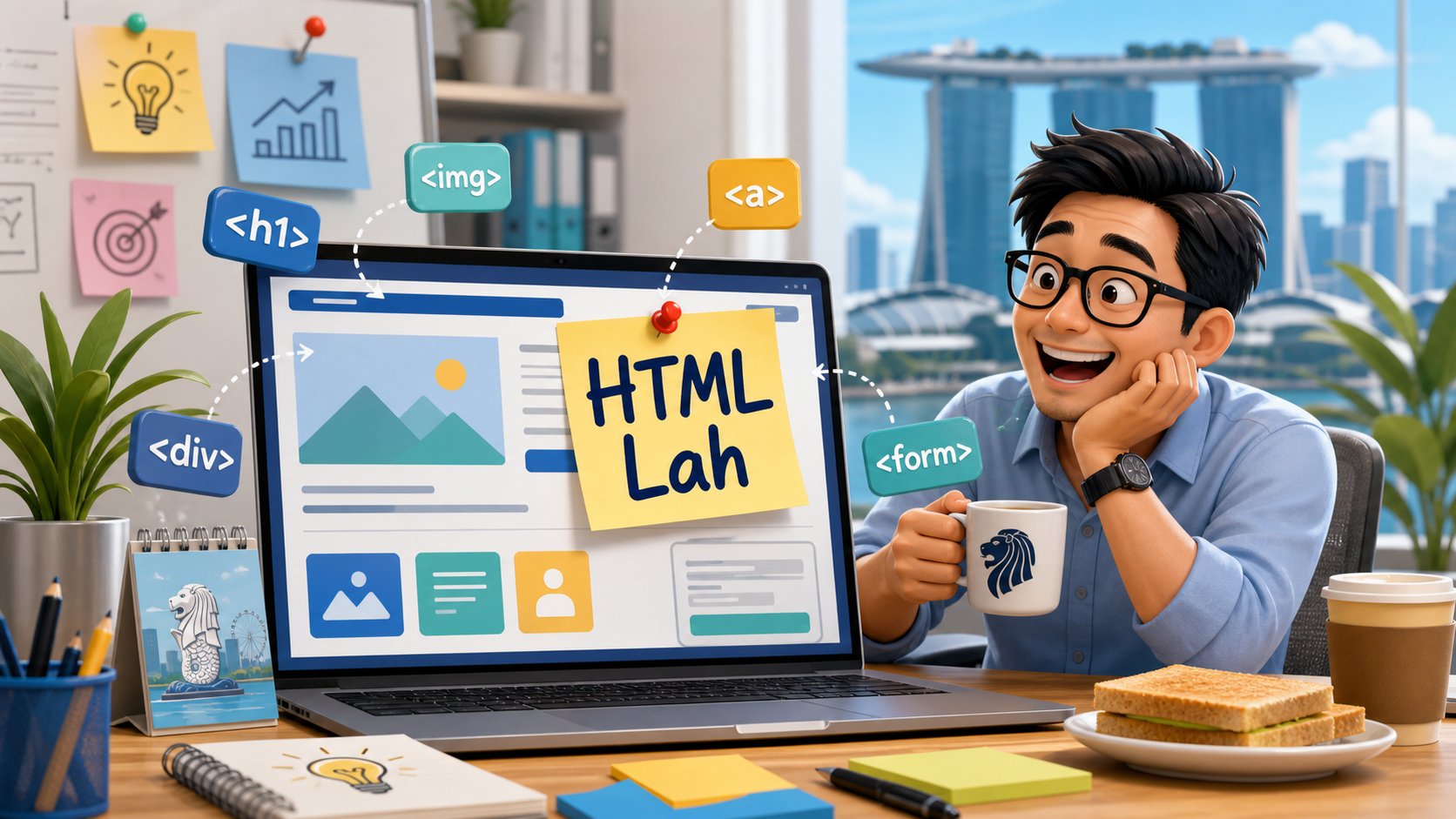
This is my little Singapore web developer journey. From dial-up internet to AI. From basic HTML pages to mobile apps, CRM systems, automation, and now artificial intelligence tools that can write code, answer questions, and occasionally behave like a very confident intern who did not read the brief properly.
Singapore changed. Technology changed. I changed too.
But some things remained the same. People still need help. Businesses still get confused. Websites still break at the worst possible time. And somewhere out there, someone still thinks pressing "refresh" ten times will fix everything.
The early internet days in Singapore
When I first started in web development, the internet was not something everyone carried in their pocket. It was something you "went to".
You sat down. You connected. You waited. You hoped.
Websites were simple then. A few pages. Some text. Maybe a logo. Maybe a blinking banner if the owner was feeling very futuristic. If you had a guestbook, wah, you were already quite happening.
There were no fancy website builders, no drag-and-drop editors, no "AI website generator in 30 seconds". If you wanted a website, somebody had to actually understand HTML. Then later CSS. Then JavaScript. Then PHP. Then database. Then hosting. Then email. Then DNS. Then SSL. Then why the contact form not sending.
Every new thing came with a new headache. Very educational. Also very character-building, which is a polite way of saying painful.
But those early days had a kind of magic.
You could make something from nothing. You could type strange-looking code into a file, upload it through FTP, open a browser, and suddenly your work was visible to the world. Not just to your neighbourhood. Not just to Singapore. The whole world.
For a young developer, that feeling was powerful.
It felt like Singapore itself. Small island, big reach.
Singapore was growing, and so were we
Singapore in those days was also changing fast.
We had grown up with HDB void decks, provision shops, public phones, old-school buses, pager numbers, Teletext, cassette tapes, and TV programmes everyone seemed to watch at the same time because streaming was not yet around to divide the nation into 500 separate timelines.
Then slowly, everything became digital.
Businesses started asking for websites. Schools started having computer labs. People began using email. Offices began replacing paper with spreadsheets. Later, everyone started using mobile phones. Then smartphones came. Then social media. Then WhatsApp became the unofficial business operating system of Singapore.
At first, a website was like a digital name card. Just show people you exist.
Then it became a sales tool.
Then it became a customer service tool.
Then it became a booking tool, lead capture tool, payment tool, content platform, SEO asset, business system, and sometimes full-time drama generator.
Meanwhile, I was also growing as a developer. From making simple pages to building web applications, mobile apps, admin dashboards, custom CRMs, business systems and tools that helped people run their operations better.
It sounds very neat when written in one sentence.
In real life, it was not neat.
It was many late nights, broken scripts, clients asking "can make this small change?" and that small change opening a hidden cave of 17 other things. It was server errors, missing passwords, forgotten domain renewals, plugin conflicts, mysterious email problems, and the occasional moment where everything worked beautifully and you felt like clapping for yourself quietly.
Because if you clap too loudly, the system might hear and break again.
The joy of building something that works
One of the best feelings as a developer is seeing something you built actually help someone.
Not in a glamorous Silicon Valley way. No dramatic music. No investor pitch. No one says "we are disrupting the ecosystem" while standing in front of a glass wall.
Sometimes it is simpler.
A business owner can finally receive enquiries properly.
A staff member no longer has to copy and paste the same data into three spreadsheets.
A tuition agency can match students and tutors faster.
A company can track customers without digging through WhatsApp chats like an archaeologist.
A website that used to look tired suddenly feels alive again.
These are small victories. But they matter.
Singapore was built on many small practical improvements. Better roads. Better systems. Better queues. Better forms. Better processes. Of course, sometimes more forms also, because balance must exist in the universe.
That same spirit exists in software development. You look at something messy, confusing, manual, slow, or painful, and you ask: can this be made better?
Not perfect. Better.
That is often enough.
The struggles behind the screen
People sometimes think web development is just sitting at a computer and typing.
Technically correct.
Also completely wrong.
A developer is not just fighting code. A developer is fighting unclear requirements, old systems, budget limits, browser behaviour, server settings, business logic, forgotten passwords, expired certificates, outdated plugins, strange screenshots, and the legendary phrase:
"Actually, can also add one more thing?"
That sentence has aged me more than time itself.
In the early days, the struggle was learning how to build for the web when information was not as easily available. Today, the struggle is different. There is too much information. Too many tools. Too many opinions. Too many "experts" saying coding is dead, websites are dead, SEO is dead, everything is dead.
Very lively industry for something apparently dead.
Now we have AI. And AI is amazing. I use it. I study it. I respect it.
But AI did not remove the need to understand people, business, structure, logic and responsibility. It just changed the tools.
Last time, we had to explain to clients what a website was.
Now, we explain what AI can and cannot do.
Same movie, different costume.
From HTML to AI
When I look back, the distance from old HTML pages to today's AI tools feels almost unbelievable.
In the past, we typed code line by line and checked the browser nervously.
Now, we can ask AI to generate a layout, explain an error, suggest a function, summarise a document, or help think through a workflow.
In the past, one missing semicolon could ruin your day.
Actually, that one still happens. Tradition must continue.
But the bigger change is speed.
What used to take days can sometimes take hours. What used to require searching through forums can now be explained in seconds. A beginner can learn faster. A business owner can understand more. A developer can explore ideas quicker.
But speed also creates a new problem.
When everything becomes faster, people sometimes think everything becomes easier.
That is not always true.
Building properly still matters. Thinking clearly still matters. Testing still matters. Experience still matters. You can get AI to generate a lot of things, but someone still needs to know whether the thing makes sense.
A calculator can calculate. But if you enter nonsense, it will faithfully give you nonsense with confidence.
AI is also like that sometimes. Very polite nonsense. Nicely formatted some more.
Singapore, technology and memory
National Day always makes me think about time.
Not just the big historical kind. Also the small personal kind.
The old neighbourhoods. The old shops. The old buses. The sound of the dial-up modem. The first websites. The first time someone emailed instead of faxed. The first time a client said, "Can put my business online?"
Singapore moved from one era to another quietly and quickly. Sometimes too quickly to pause and feel it.
We went from waiting for pages to load, to expecting instant replies.
We went from handwritten notes, to emails, to WhatsApp, to dashboards, to AI assistants.
We went from "what is website?" to "can AI build my system?"
And through all that, I somehow remained here, still building, still fixing, still learning, still explaining, still occasionally staring at a bug like it personally insulted my ancestors.
That is the journey.
Not always glamorous. But real.
What I learned along the way
If there is one thing my journey taught me, it is that technology is never just about technology.
It is about people trying to do something better.
A business owner wants to stop losing enquiries.
A staff member wants less manual work.
A customer wants clearer information.
A developer wants the system to stop throwing errors at 2am, thank you very much.
Good technology respects real life. It does not just look impressive. It fits into how people actually work, think, forget, panic, ask questions, change their minds and come back later with "one small update".
That is why I still enjoy this work after so many years.
Because behind every website, app or system, there is a human story.
Sometimes inspiring. Sometimes funny. Sometimes messy. Sometimes all three before lunch.
Majulah, still
"Majulah Singapura" means "Onward Singapore".
And maybe that is also the spirit of being a developer here.
Keep moving.
From dial-up to broadband.
From static pages to dynamic websites.
From websites to web apps.
From mobile apps to CRMs.
From automation to AI.
From confusion to clarity.
From "cannot lah" to "can, but let's do properly".
Singapore's story is a story of building. Not just buildings, but systems, habits, trust, discipline and imagination.
My own story is much smaller. Just one developer's journey through changing tools, changing clients, changing technology and changing times.
But I am grateful to have witnessed it.
I was there when the internet sounded like a robot choking on a telephone line.
I am here now when AI can write code faster than some people can write WhatsApp replies.
And between those two worlds, I have learned this: progress is not just about new technology. Progress is remembering where we came from, laughing at the chaos, learning the next thing, and still choosing to build.
So this National Day, while the flags are up and the songs play again, I'll probably think about Singapore, my journey, the old internet, the new AI world, and that strange modem sound from long ago.
Krrrrr... eeeeee... shhhhhhh...
Somehow, it still sounds like the beginning of something.