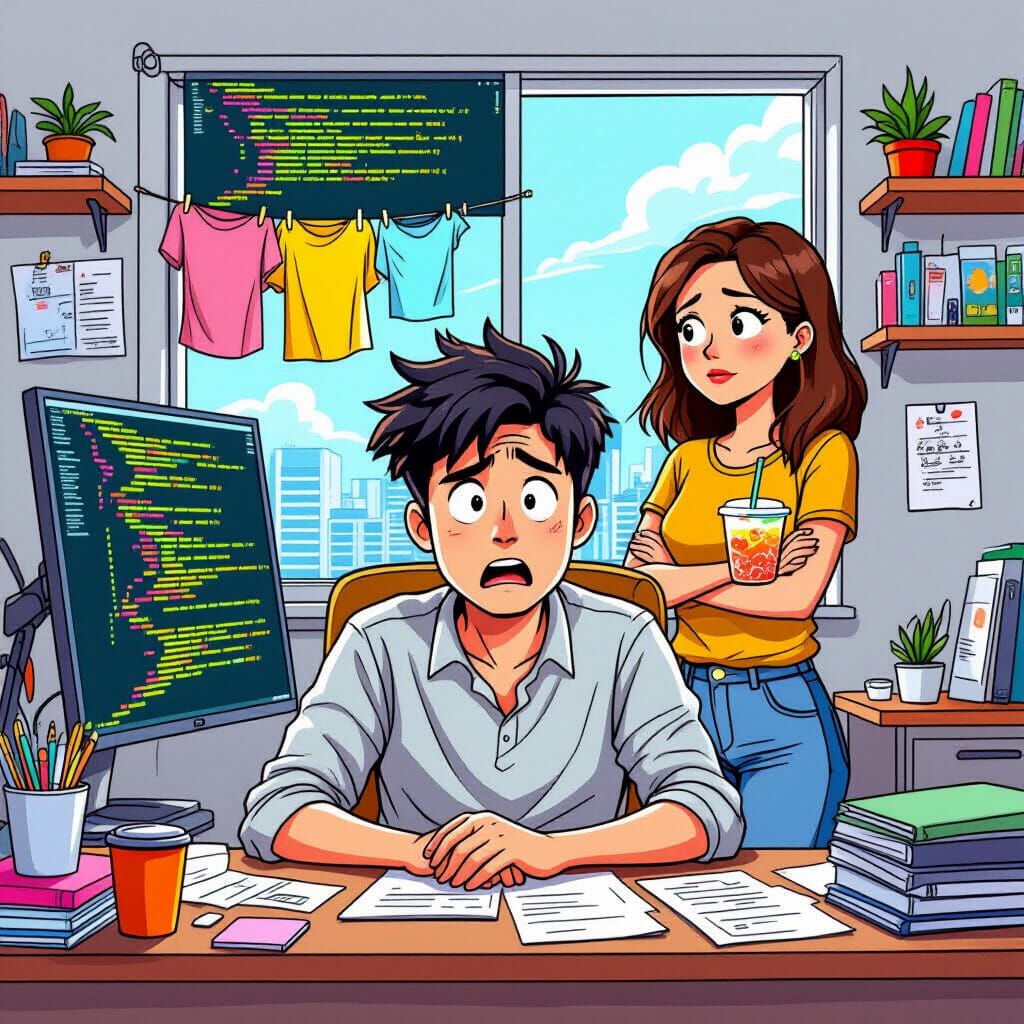
Quick summary for busy business owners.
- A startup app needs more than screens: users, data, backend, permissions, payments, support and maintenance.
- AI-generated prototypes can help validate ideas, but should not be mistaken for production software.
- The expensive mistake is building too much too quickly without a clear MVP and technical foundation.
- Founders should plan the smallest useful version before investing in a full app.
AI coding tools make it tempting to build a startup app quickly. You describe the idea, get screens, connect a few features and suddenly the project feels real.
That speed can be useful. But it can also become expensive if the prototype turns into a messy production system before the business model, user journey and technical foundation are clear.
An app is not just the visible screen
Startup founders often think in screens: login, profile, listing, booking, payment, dashboard. But the app also needs backend data, admin tools, security, notifications, error handling, analytics, support and future updates.
If those are not planned, the first version may look promising but become hard to improve.
The MVP should be smaller than you think
A good MVP is not a cheap version of the final dream. It is the smallest version that tests the most important business assumption.
For example, do users need the service? Will they submit requests? Will they pay? Can the operation be fulfilled manually first? These questions often matter more than building every feature.
Where vibe coding creates risk
The risk is not only bugs. The bigger risk is building the wrong structure too early.
- User roles may not be planned properly.
- Data may be stored in a way that cannot scale.
- Admin tools may be missing.
- Security and privacy may be weak.
- Payment or booking logic may be incomplete.
- The code may be difficult for another developer to maintain.
Use AI for discovery, then build responsibly
AI-assisted coding is useful for exploring layouts, workflows and prototypes. It can help you communicate the idea better. But before real users, payments or customer data enter the system, the app should be reviewed properly.
A responsible build may still use AI tools, but the architecture and decisions should be owned by someone with development experience.
Final advice
Do not let speed trick you into skipping planning. A startup app should start with a clear user journey, business model, MVP scope and maintenance plan.
Have a startup app idea?
I can help you reduce the first version to a practical MVP and identify what should be built, tested or avoided first.
Discuss your app idea View app servicesCommon questions about this topic.
Can I use AI to build a startup app?
You can use AI to prototype and explore ideas, but production apps need proper planning, review, testing, security and maintenance.
What should a startup MVP include?
An MVP should include only the core journey needed to test the main business assumption, plus enough backend/admin support to run it safely.
When should I talk to a developer?
Talk to a developer before investing heavily in features, especially if the app handles users, payments, bookings or important business data.